
What To Put On Your Van, Hoodie, and Site Board
For most small and medium-sized trade and construction businesses, your van, hoodies, and site boards are your most visible advertising. They often seen more than your website.
They are also some of the cheapest ways to build trust and generate local enquiries if you get the message right.
In this post, we’ll look at what to put on each of these assets, so they work together as a simple, joined‑up marketing system for your business.
The Non‑Negotiables for All Three
Before we split out van, hoodie, and site board, there are some elements that should appear consistently across everything.
Business name and/or logo. To help build recognition, these need to be clear, legible, and the same everywhere.
What you do. Include a short, plain‑English description, such as “Loft Conversions & Extensions” not just “Acme Developments.”
Primary contact method. Go for a mobile number plus either a website or email, rather than five different options.
Brand colours and fonts. Using the same colours and font across van, clothing, and boards makes you look established and professional.
1. What To Put On Your Van
Your van is your mobile billboard. Used correctly, it can give you hundreds of local impressions every week just by doing your normal work.
Front doors & side panels (the main billboard):
Business name / logo – large and central.
Key services – 3–5 words max (e.g. “Roofing - Repairs - Replacements”).
Phone number – big enough to read from a passing car.
Website – short and easy to type (avoid long URLs).
Rear doors (stuck in traffic advertising):
Phone number – largest element on the back.
Website – beneath the phone number.
Optional: Short benefit-led strapline such as “Local, reliable builders since 2008” or “Specialists in extensions & refurbishments”.
Optional but powerful extras:
Accreditation logos (FMB, Gas Safe, NICEIC, TrustMark, CHAS, etc.) – only if current and relevant; they add credibility immediately.
“Find us on…” icons if you rely heavily on Google Reviews or a specific platform, but don’t clutter it.
Design & Legibility Tips
Use obvious contrast (e.g. dark text on light van or vice versa) – avoid text over complicated photos.
Use a clear, bold font – no script fonts for your phone number.
Keep wording short – your van is not a brochure.
Chapter 8 of the UK Traffic Signs Manual provides guidance on high-visibility livery for vehicles working on or stopping on public roads, especially for highway maintenance, utilities or traffic management work.
2. What To Put On Your Hoodie (and Other Workwear)
Branded hoodies and workwear turn your team into walking adverts on site, in merchants, and in coffee shops. If your crew looks smart and consistent, you send a strong signal that your work will be organised and professional too.
Front of Hoodie / T‑Shirt
Keep the front simple and neat:
Left chest:
Logo or business name.
Optional: one line of text such as “Electrical Contractors” or “Groundworks.”
This keeps your team looking clean and uniform while still clearly representing the company.
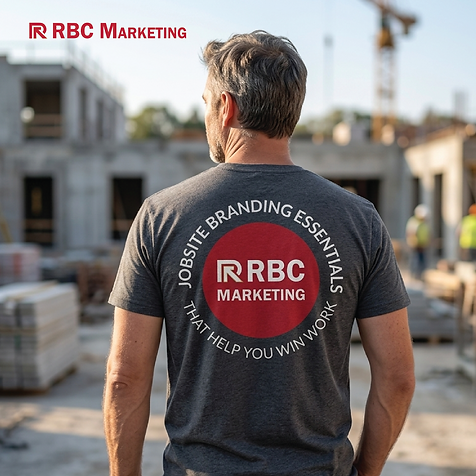
Back of Hoodie (Your Walking Billboard)
Use the back for your “advert”:
Business name or logo – larger.
Key service line – e.g. “Driveways & Patios” or “Plumbing & Heating.”
Phone number or website – choose one main call to action so it can be read quickly.
For site work, consider high‑visibility garments branded with your logo, so you meet safety requirements while still promoting your brand.
Practical Tips for Trades & Construction
Choose durable, comfortable fabrics that can cope with dust, mud, and frequent washing.
Avoid putting too much text; movement and PPE will often cover parts of the hoodie. Focus on large, bold, minimal information.
Make sure colours match or complement your van and site boards so your team looks like one cohesive brand.
3. What To Put On Your Site Board
A good site board does three jobs:
Meets safety and information requirements where needed;
Reassures neighbours and passers‑by that you’re a legitimate, professional contractor
Generates enquiries from people walking or driving past.
Two Types of Boards You’ll Typically Use
Site Safety Board (mandatory information) – covers legal safety messages and instructions.
Brand/Marketing Board (your advert) – focuses on your company and services.
On many smaller domestic jobs, you’ll at least want a marketing board on the fence or scaffold; on larger or higher‑risk sites, you will need a safety board as well to meet regulations.
Safety / Information Boards – Key Points
Under UK regulations such as the Health and Safety (Safety Signs and Signals) Regulations 1996 and related standards, you must display clear safety information where risks cannot be avoided by other means. Typical content includes:
Mandatory PPE messages (e.g. “Hard Hats Must Be Worn,” “High‑Visibility Clothing Must Be Worn”).
Hazard warnings (e.g. “Danger – Construction Site. Keep Out”).
Prohibition signs (e.g. “No unauthorised access”).
Emergency and contact information (site manager name/number, company details).
Make sure safety boards use standard symbols (BS EN ISO 7010 pictograms) and are weather‑resistant and clearly visible at the site entrance and other key points.
Your Marketing Site Board – What To Include
For your branded site board (often on domestic jobs):
Business name / logo – prominent and clean.
What you do – e.g. “Loft Conversion Specialists” or “New Builds & Extensions.”
Location / service area – e.g. “Serving Horsham & Surrounding Areas” to emphasise that you’re local.
Contact details – phone plus website (or QR code if you know your audience will use it).
Proof of credibility – accreditations, scheme membership (e.g. Considerate Constructors Scheme, trade bodies), or “Approved Contractor for…” where relevant.
Keep the design simple and bold so it’s readable from across the street. Your board should also be placed so that it doesn’t obstruct pavements or roads and complies with any local authority rules (for example, where boards encroach on public land you may need permission).
4. Making All Three Work Together as a Mini Marketing System
The real power comes when your van, hoodies and site boards all look and feel like the same company and point people to the same next step.
For a small to medium construction or trade business, a straightforward approach could be:
Same logo, colours, and key message across all three – so people start recognising you around town.
One primary call to action everywhere – e.g. always the same phone number and web address.
One core positioning statement – e.g. “Extensions & Refurbishments Specialists” or “Local Roofing Experts”.
Practical Example Scenarios
When you’re parked outside a job, your site board + van + hoodies are all visible – the neighbour sees the same logo and wording three times, which makes them far more likely to remember and trust you.
Photos of completed work shared online will naturally include your branded hoodies and site boards, reinforcing your name every time someone scrolls past.
This is how you turn everyday “operational stuff” into always‑on local marketing without extra ad spend.
Summary
Your van, hoodies, and site boards are not just branding “nice to haves” – they are some of your most cost‑effective tools for winning local work.
Put clear, minimal, bold information on each item: who you are, what you do, and how to contact you.
Ensure safety and legal signage is in place on sites where required.
Make everything consistent so people recognise you wherever they see you.
When done well, these three assets quietly work together to build familiarity, trust, and a steady flow of local enquiries.
Take Action
Audit what you currently have – stand across the road and ask: can I instantly see who we are, what we do, and how to contact us?
Standardise your message – decide on one core service line and one primary contact method to use everywhere.
Update designs in batches – next time you order workwear or update your van, bring your site board design in line at the same time.
If you’d like a second pair of eyes on your current van, hoodie, or site board designs, save a few photos and we can walk through practical improvements step by step.
Up Next
In the next post, we’ll dive into: “One Photo a Week That Wins You Work,” where we look at how to capture and use simple, regular site photos that build trust, fill your social feeds, and turn browsers into enquiries.
Found This Useful?
I hope you've found this post, what to put on your van, hoodie, and site board, helpful. If you would like to discuss how to improve and align your van signage, branded workwear, and site boards so they generate more local enquiries, please email me. You can also connect with me on LinkedIn. If you would like to talk about your construction company's digital marketing strategy, feel free to reach out as well.
About the Author
John Wright started his career in the construction industry at Kennedy Builders Merchants in the 1980s. This marked the beginning of a 35-year journey in sales, marketing, and business development in construction.
In 2016, John transitioned into digital marketing as an it’seeze web design franchisee, before founding RBC Marketing in 2022. Today, he uses his strong knowledge of the construction industry along with marketing skills. He helps construction companies create a strong online presence. He also drives business growth through both digital and traditional marketing strategies.


Comments